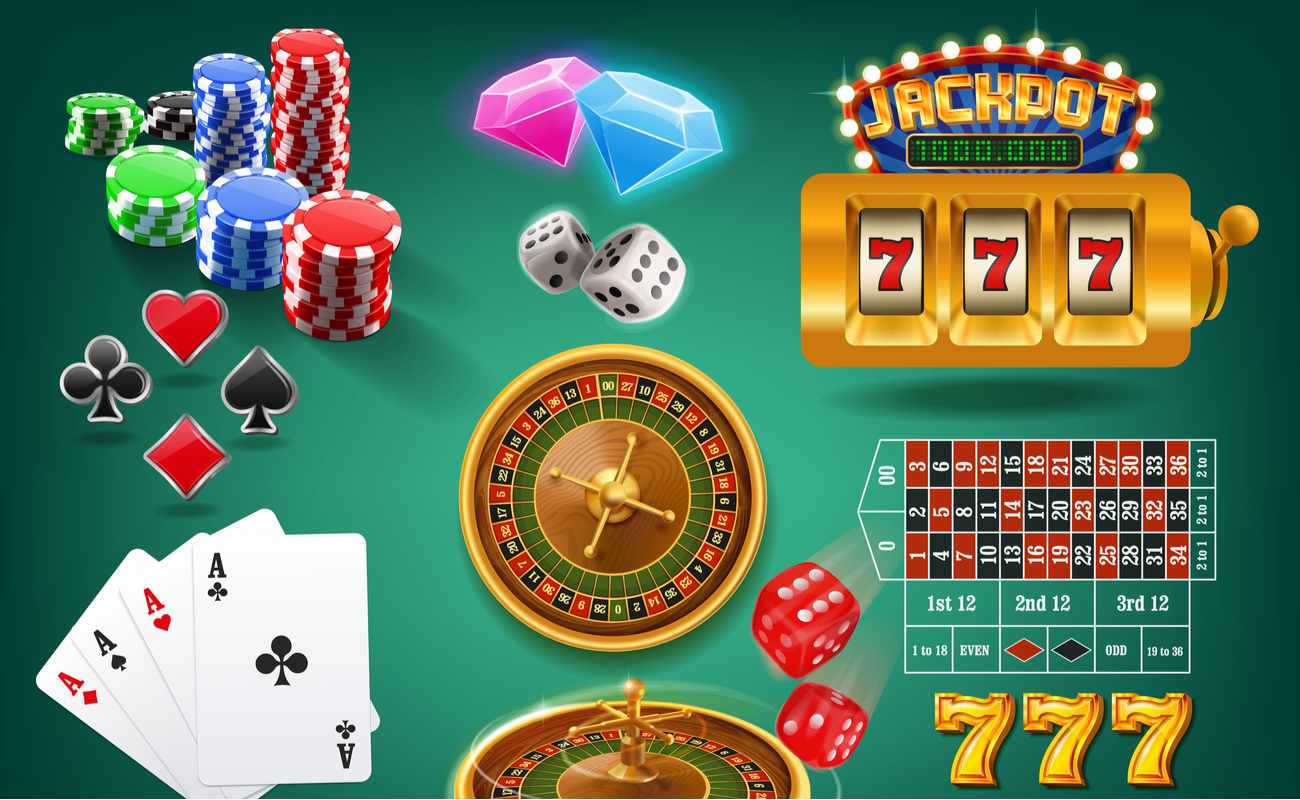
Walking up to a live roulette table for the debut blends anticipation with a touch of elegance, and it’s today more accessible than ever to players across the UK. At its core, roulette is a game of pure chance where a small ball travels around a numbered wheel until it lands into a pocket, yet the way a player manages their bets can define the entire session. Understanding a few foundational principles before placing that first chip separates a mindful newcomer from someone depending solely on luck. This guide explains actionable, straightforward strategies designed specifically for those who are fresh to the live casino environment. It examines how the game operates, which bets hold the lowest risk, how to manage a modest bankroll, and what to look for when accessing a real-time table hosted by a professional dealer. The goal is not to guarantee guaranteed wins, because no system can defeat the house edge built into the wheel, but to arm a new player with the knowledge to make educated decisions, extend their playing time, and savor the session sensibly at platforms like Vipsta Casino, where the live lobby transports the authentic casino floor right to the screen.
Grasping the Actual Roulette Wheel and Table Layout
Before any plan can form, a player must feel completely at home with the tangible components of the game they see on screen. European roulette, which is the primary variant presented in most UK-facing live casinos such as Vipsta Casino, includes a wheel with 37 pockets marked from 0 to 36. The single green zero is the essential feature that offers the house its mathematical advantage of 2.7 percent, indicating that over an infinite number of spins, the casino anticipates to retain £2.70 for every £100 wagered. American roulette wheels, which introduce a double zero pocket, raise that edge to 5.26 percent and should generally be avoided by new players who want their bankroll to endure longer. The betting grid displayed alongside the wheel mirrors the numbers and incorporates sectors for outside bets such as red or black, odd or even, and low or high. In a live dealer setting, this grid is displayed digitally on the screen, and players tap to place chips while observing a real wheel spin in high definition from a professional studio.
The layout is intentionally intuitive, arranging numbers into rows of three and providing clear zones for the dozen and column bets that include twelve numbers each. New players often fixate on the busy inner grid where single number bets guarantee a 35 to 1 payout, but the strategic heart of the game rests in the outer sections. Those outside betting areas constitute the most sustainable approach for a newcomer because they return even money or two to one and deliver wins far more frequently. Observing how the dealer declares the winning number and removes losing bets within seconds shows the rhythm of the round. A typical live roulette table at Vipsta Casino functions on a clear cycle: a betting window starts, the dealer rotates the wheel and launches the ball, the window shuts, and the result is revealed. Understanding this tempo prevents rushed decisions and helps a player settle into a calm, deliberate pattern rather than answering emotionally to each outcome.
Low-Risk Outside Bets and the Reasoning Behind Even-Money Wagers
The best entry point for any beginner live roulette player is the range of outside bets that provide the best probability of winning on any particular spin. Red or black, odd or even, and low (1–18) or high (19–36) are the classic even-money propositions that encompass 18 of the 37 numbers on a European wheel, translating to a win probability of 48.65 percent. The payout is a simple 1 to 1, signifying a £5 bet returns £5 in profit plus the original stake. While these bets do not produce the dramatic windfalls linked with hitting a single number, they generate regular returns that maintain a bankroll ticking over and deliver the positive reinforcement that aids a new player stay engaged. The dozen and column bets encompass 12 numbers each, offering 2 to 1 with a win probability of 32.43 percent, and they serve as a helpful middle ground for someone who desires slightly more excitement without going into the high-variance territory of straight-up bets.
There is a certain rule linked to even-money bets on European roulette that every UK player should understand before sitting down at a live table. Known as “la partage” or the en prison rule based on the variant, it activates when the ball lands on the green zero. Under the la partage rule, which is standard at many live dealer tables including those found at Vipsta Casino, a player who made an even-money bet receives half of their stake back rather than forfeiting the entire amount. This essentially cuts the house edge on those specific wagers from 2.7 percent to 1.35 percent, making them the extremely player-friendly bets in the entire casino. A newcomer who keeps exclusively to even-money bets on a table with this rule is betting with one of the lowest house advantages accessible anywhere. The actual takeaway is evident: ignoring the inner grid entirely during the first several sessions is not a mark of timidity but of tactical intelligence, allowing the player to learn the flow of live roulette while providing their bankroll the best possible chance to last.
The Martingale Strategy and Why Novices Should Treat It with Care
Just about every novice to roulette will encounter the Martingale system during their early talks about strategy, and its appealing straightforwardness requires a careful look. The concept is straightforward: after every loss on an equal-odds bet, the player increases the wager twofold on the next spin so that a single win recovers all previous losses and delivers a small profit equal to the original bet. On paper, the mathematics hold up perfectly in an unbounded situation with no table limits and boundless capital. In the reality of a actual casino setting, however, two firm restrictions break the system fast. Every table has a highest wager cap, and every player has a finite bankroll. A sequence of just seven consecutive losses, which is mathematically unavoidable over enough spins, turns a humble £5 opening stake into a £640 wager on the eighth spin, and by that point the aggregate loss already stands at £635. Most new players simply do not have the funds or the emotional composure to place that eighth wager.
Beyond the numerical aspects, the Martingale system generates a deeply uneasy gaming session that goes against the peaceful, fun time most newcomers are looking for. The player uses the bulk of their time losing small amounts and then faces moments of extreme stress when a big wager must be placed to chase a mounting deficit. The wins, when they come, seem more like survival and more like relief, which is not a viable psychological pattern for entertainment. Live roulette tables at Vipsta Casino display clear minimum and maximum bet ranges, and a quick glance shows how quickly a doubling sequence reaches the limit. A more stable choice for a new player is the D’Alembert system, which adds one unit to the stake after a loss and reduces it by one increment after a win, generating a softer pattern that does not require exponential risk. No matter which system a player tries, the essential guideline remains the same: test it first with very small stakes and never stray from the fund restrictions set at the https://bleacherreport.com/articles/10115809-ncaa-wcbb-championship-odds-2024-caitlin-clark-iowa-underdogs-vs-south-carolina start of the session.
The way Live Dealer Interaction Influences the Playing Experience
Taking part in roulette in a live dealer environment is a essentially different experience from using a digital random number generator, and new players benefit from understanding how the human element alters the rhythm and feel of the game. A professional dealer, often transmitting from a dedicated studio in crisp high definition, spins the wheel, releases the ball, announces results, and communicates with players through a chat function. This interaction transforms what could be a solitary screen-based activity into a social occasion that recreates much of the atmosphere of a physical casino floor. For a UK player accessing Vipsta Casino in the evening, the live lobby offers tables with varying dealer personalities, betting limits, and camera angles, permitting a newcomer to locate a setting that fits their comfort level. Some tables are brisk and businesslike, with rounds ending in under a minute, while others adopt a more leisurely pace that offers beginners extra time to place bets and view the action.
The practical implications for strategy are nuanced but real. A live dealer turns at a consistent speed, but the physical nature of the wheel means that the ball’s final resting place is dependent on genuine mechanical randomness rather than computer algorithm. This eliminates any concern about software fairness that some players carry into digital table games. The chat feature also provides an opportunity to direct the dealer polite questions about rules or procedures, though dealers cannot provide strategic advice. New players should spend the first few minutes at a table simply to view, absorbing the visual cues that show when betting is open and closed. The countdown timer shown on screen takes away any guesswork, but observing a few rounds unfold before participating develops confidence. The live setting also introduces the concept of “neighbour bets” and other call bets that are announced verbally in some variants, though a newcomer is best served by overlooking these advanced options entirely and concentrating on the straightforward outside wagers talked about earlier.
The Reason Bankroll Management Serves as the Actual Foundation of Any Strategy
No betting system in the world can function without a well-defined plan for managing money, and for a fresh player, this is the single most important habit to develop from day one. Bankroll management is about deciding in advance how much money to set aside to a roulette session and then sticking to that limit no matter whether the session is going well or poorly. A sensible starting point for a UK player exploring live roulette at Vipsta Casino is to set aside an amount that would not disrupt daily living expenses if lost entirely, treating it as the cost of entertainment rather than an investment. Once that entire session budget is fixed, the next step is to break it down into individual bet sizes. A common guideline suggests that a single wager should be no more than one to two percent of the total bankroll, so a player with £100 might place outside bets of £1 or £2 per spin rather than risking £10 chunks that could wipe out the balance in a few unlucky rounds.
This structured approach does more than preserve funds; it transforms the psychological experience of the game. When a player understands they have enough ammunition for fifty or a hundred spins, the certain short losing streaks feel controllable rather than catastrophic. Chasing losses by increasing bets after a bad run, often called the gambler’s fallacy in action, becomes less appealing because the structured plan provides a rational anchor. Another crucial element is setting a win goal, a modest profit target at which the player will end the session and walk away. For example, a newcomer might decide that if their £100 bankroll grows to £130, they will cash out and keep the £30 gain. Live roulette tables at Vipsta Casino operate around the clock, so there is no need to squeeze every last spin out of a single sitting. The restraint to log out when the predetermined limit or goal is reached is what ultimately distinguishes a strategic player from one who lets the game drive their decisions.
Identifying the Difference Separating European and American Roulette in Live Lobbies
One of the most significant choices a new player makes happens before a single chip is set, and that is the decision between European and American roulette tables. The variance is not merely aesthetic; it has a direct and quantifiable impact on the expected return of every bet. European roulette, with its single zero, holds a house edge of 2.7 percent, while the American version introduces a double zero pocket and pushes that edge to 5.26 percent. In practical terms, a player betting £10 per spin on an American wheel can predict to lose roughly twice as much per hour as someone playing the same stakes on a European wheel. For a newcomer who is still learning the rhythms of live roulette and wishes their bankroll to last across many sessions, this gap is too significant to ignore. The live dealer lobby at Vipsta Casino clearly identifies each table variant, and the visual distinction is immediately evident: the European wheel presents a single green zero, while the American wheel shows both a zero and a double zero.
Beyond the headline house edge, the inclusion of the double zero disrupts the logic of some betting systems and changes the odds on every wager type. Even-money bets on an American wheel prevail 47.37 percent of the time compared to 48.65 percent on a European wheel, and the la partage rule that gives European players half their stake back on a zero is almost never accessible on American tables. Some live lobbies also provide French roulette, which employs the same single-zero wheel as European but incorporates the full en prison rule where an even-money bet is kept over to the next spin when zero hits, providing the player a chance to recover it entirely. This variant delivers the lowest house edge of all at 1.35 percent on even-money bets and embodies the mathematically optimal choice for a new player who can locate it. The takeaway is straightforward: a newcomer scanning the live casino section should sort for European or French roulette tables and view the American variant as a less favourable choice that speeds up the drain on their bankroll without providing any balancing benefit.
Building a Personal Plan for Steady and Pleasurable Games
Approach in live roulette goes further than bet selection and money management to include the whole routine a player builds around their sessions https://vipstascasino.com/. A careful approach to when, where, and how to play can significantly enhance the experience and minimize the risk of impulsive decisions that compromise even the best-laid plans. The first element is selecting the right moment to sit down at a live table. A player who logs in while tired, distracted, or emotionally unsettled is far more likely to give up their strategy and chase losses or overbet on a hunch. Allocating a certain window of time for a session, perhaps an hour on a quiet evening, creates a structure for the activity that makes it easier to walk away when the time is up. The second element is the physical environment. Playing live roulette on a mobile device while commuting or watching television divides attention and can lead to missed betting windows or rushed decisions, whereas sitting comfortably with a stable internet connection and a clear screen allows full engagement with the game.
The third component of a solid routine involves keeping a simple record of results, not as a way to predict future outcomes (which is impossible) but as a tool for honest self-assessment. Recording the starting bankroll, the bet sizes used, the strategy followed, and the final balance after each session forms a clear picture over time of what is actually happening rather than what the player remembers happening. This practice often discloses patterns, such as a tendency to increase stakes after a win or to extend sessions beyond the planned endpoint, that can then be addressed consciously. The live casino platform at Vipsta Casino encourages responsible play by offering deposit limits and session reminders that a new player can activate in their account settings, adding an external layer of structure to the internal discipline they are developing. The most successful strategy is the one that allows a player to look back on a session and feel that they made their own choices, stayed within their boundaries, and enjoyed the unique atmosphere that only live roulette can provide.